



The railroad was only thirty yards from the building’s east wall, just outside the window of 8B. Heavy freight cars passed by every day. Over the years, Tanka had learned to tell apart at least ten different types of rail car. Where did they all go? She never stopped daydreaming about it.
Snow is falling, snow is falling,
Full of joy are weeee.
Come out, people, animals,
Come and play with me!
Valentina Izmaylovna crossed her arms over her prominent bosom and stared at Babayev, a boy with bushy eyebrows that formed an attractive arc on his forehead.
“Sit down, Babayev. Three out of ten.”
“Threeeee? Why only threeee, Valentina Izmaylovna?”
The teacher’s face took on a peculiar expression. Her pursed lips, the vertical crease in her forehead, and her curly hair made her look just like Beethoven. whose dusty bust glowered down over the classroom from the mezzanine.
“The words of a poem are a song, Babayev. The-mu-sic-of-the-wind. And you screech them like a hawker in the marketplace!”
Babayev hung his shaggy head. Offended, he shuffled back to his seat. What did that beanpole know about the music of the wind? About how the morning light repeats the lines of the minarets, or how the dreaming sunshine rests on their ancient stones?
Even if Babayev’s mother did sell ripe green melons in the marketplace, her ringing voice echoing over the summery square of Samarkand, city of his birth, was the sweetest song the boy had ever heard.
Tanka felt sorry for her classmate. What was snow to him, an Asian whose brow was creased with sorrow!
The girl examined the steel caterpillar winding its way along the wall. Twenty-two tons. Serial number five. The tank cars were smooth and sublime. Their long, sooty procession, gorged with fuel oil, resembled the black draft horses Tanka had fed by hand at her grandma’s house.
When the bell finally put an end to the torture, everyone started packing their things. Tanka discovered that her coat and scarf were missing from the rack in the changing room.
After spending at least half an hour scouring the classrooms, she found her clothes in one of the latrines for the lower grades. She pulled the stinky things out of the toilet, rinsed them thoroughly, and put them in her bag.
It was late October and the passers-by were bewildered to see a girl dressed in nothing but a thin school dress. She must be some kind of idiot! What were her parents thinking!?
Babayev was waiting for her at the crossroads. Tanka sat down beside him on the concrete piles that lay along the railroad like giant matches.
“Where’ve you been, Tan? Aren’t you cold?” he asked, worried.
“Of course not,” said Tanka, gritting her teeth, “I’m used to it. At home I always sleep next to the open window.”
“Even in the winter?”
“Uh-huh. If we had a balcony, I would always sleep outside.”
“In Samarkand we had a big backyard. In the summer I would sleep there in my hammock. I used to listen to the chirping cicadas and look up at the night sky. How big and bright the stars are in Central Asia… Have you ever heard of the heavenly horses?”
“Never.”
“Sometimes they show up in your dreams and take you with them, far away.”
“Where do they go?”
“To the end of the earth.”
“The earth has no end, don’t you know that? The earth is round.”
“Sure. But what would we think if we weren’t so sure of that?”
“That’s true. Go on.”
Babayev had often heard his grandmother tell the story. It was his favorite.
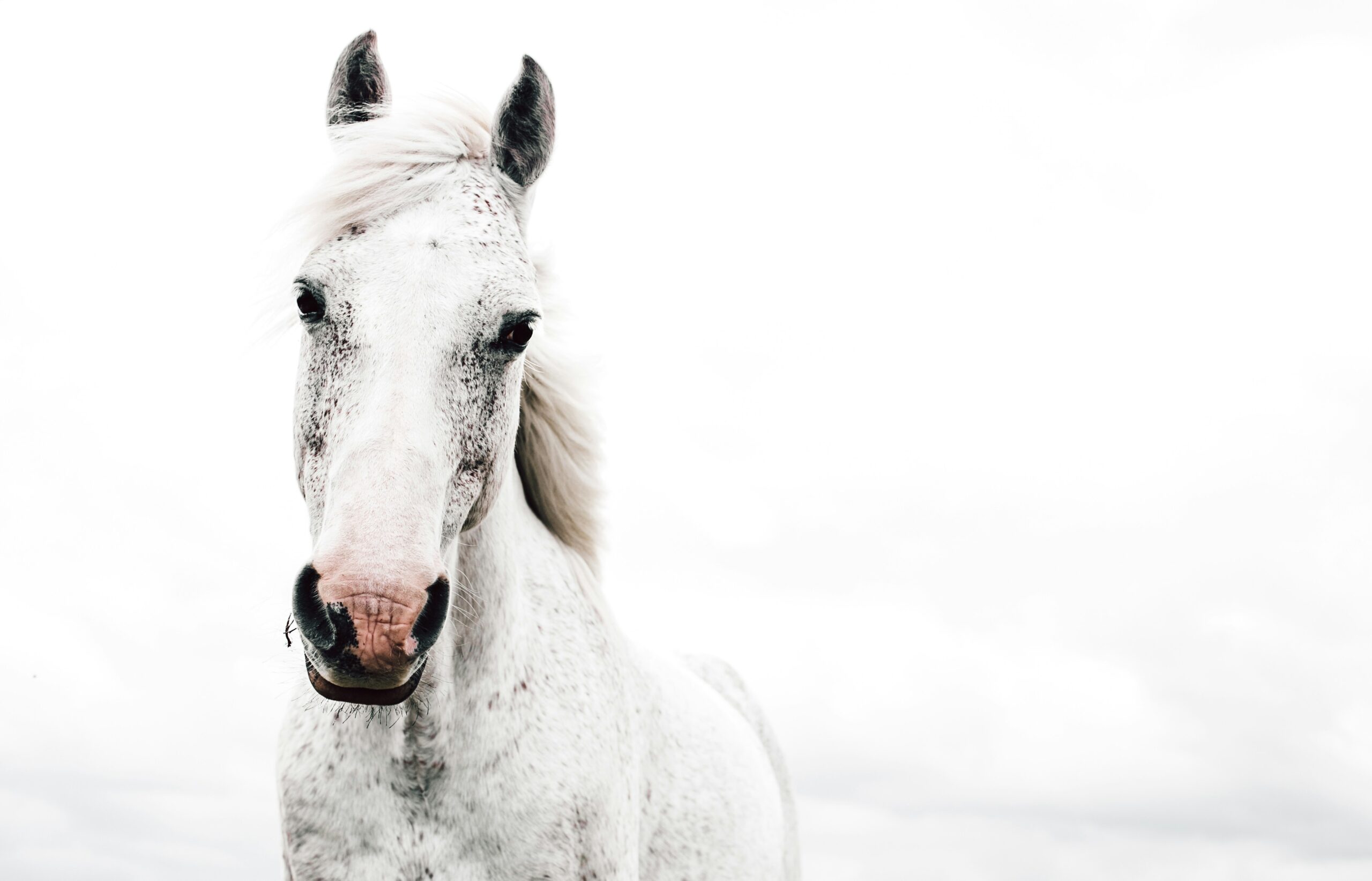
“Once, many years ago, a cruel warrior, a powerful man, dwelt on the earth. He had the most beautiful wives and the finest horses, of an exceptional race. One day his favorite mare bore a foal, with hair that shone like the sun. The colt grew into a stallion of rare strength and beauty. Soon other warriors began to arrive from faraway places, seeking to pit their own best horses against the stallion, but no other steed could match its pace. So instead the warrior had his horse compete against a sapsan, the swiftest falcon in the world. In the blink of an eye, the race was over. The horse had outsped the bird. The rich man was besotted with his steed. Intoxicated with pride, he ordered the stallion to defeat the wind. It was a grand battle. Many came to witness the duel and were rewarded with a spectacular clash between heaven and earth. The wind seemed to die down, and everyone thought the stallion had won, but that was a ruse. The wind threw the last of its strength into the fray and whisked the magnificent steed and the mare, its mother, away with it, far from those covetous people!”
They sat in silence for a moment. Babayev removed the thick pullover his great-grandma had knitted for him and laid it tenderly over Tanka’s shoulders.
“Where do you think these tracks go?” asked Tanka, as she wrapped herself up in the warm sheep’s wool.
“Who knows! Where all tracks go.”
“Where’s that?”
“To the end of the earth?”
“That far?”
“That far.”
Tanka knelt and laid her ear against the rail.
“What are you doing, Tan?”
“I’m listening! Sound moves ten times as fast through steel.”
“And? Can you hear it, Tan?”
“Not yet. But we have to hurry! Let’s go to the old station.”
They ran down the tracks, which reflected the sun’s cool light, along a winding stream where hogweed made huge parasols.
When the last freight car, covered with a tarp, reached the platform, Babayev lifted Tanka onto the footboard and then jumped in after her.
The children drifted off to the monotonous sound of the steel wheels on the rails.
The first stars of Pegasus slowly began to glow. They rose from the east, soaring ever higher into the clear sky.
The tireless horses of Tamerlane flew over the dreamy dunes, far away from home. Where east meets west, to the end of the earth.




Comments